
NXTBlue helps growing teams with startup consulting, business automation, and practical digital systems-so more of your traffic turns into measurable outcomes.

For owner-led businesses that still optimize only for Google: Cloudflare made AI agent readiness measurable. Use the checklist below to see what assistants need-then decide if a website modernization should own those fixes.
Short answer
What if the next serious buyer never lands on your homepage?
They ask ChatGPT, Gemini, Claude, Perplexity, or another assistant: Who can do this near me? Who is reliable? What should I compare? The model answers from what it can retrieve, summarize, and trust-then the human may call, WhatsApp, or book without a long browse session.
That does not mean websites die. It means your site must work for two readers: a person skimming for the next step, and a machine extracting a citable fact. If assistants cannot find clear services, hours, pricing bands, proof, or contact paths, they will prefer a competitor who published those facts in plain structure.
This is the practical meaning of an AI agent ready website-not sci-fi autonomy on every small shop.
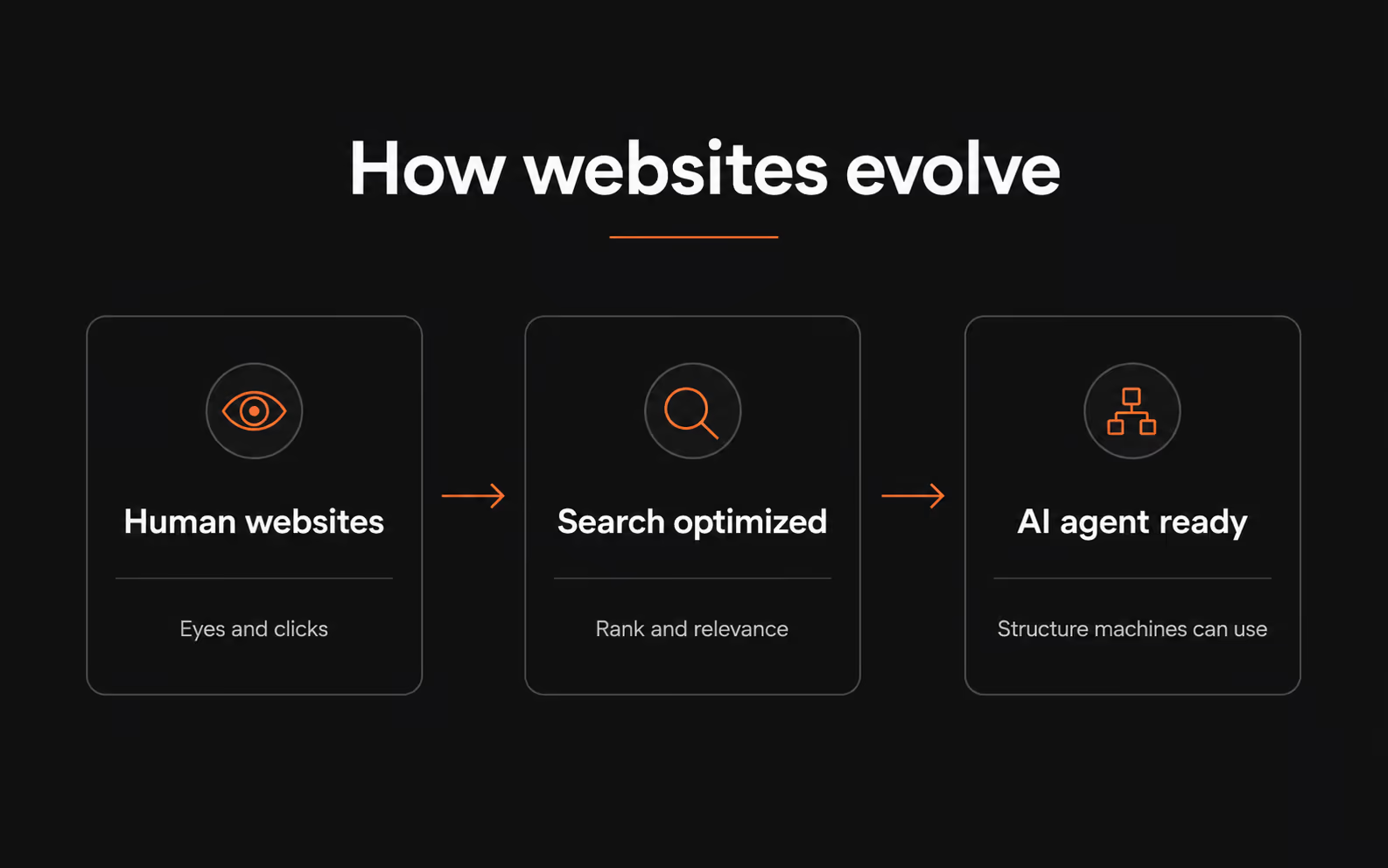
Rough evolution:
Human websites → pages designed for eyes and clicks
↓
Search engine optimized websites → titles, links, speed, and relevance for Google
↓
AI agent ready websites → the same foundation, plus structure machines can parse, cite, and (when relevant) act on
AI is already showing up as:
Treat AI as another visitor class. Design for humans first. Expose information so machines do not have to guess.
In April 2026, during Agents Week, Cloudflare introduced a public Agent Readiness score and scanner at isitagentready.com, explained on the Cloudflare Blog. The pitch is simple: the web learned to speak to browsers, then to search engines; now it needs to speak to AI agents.
Cloudflare Radar scanned a large set of high-traffic domains (after filtering redirects and similar noise). Highlights they published:
| Signal | What Cloudflare reported |
|---|---|
robots.txt | ~78% of sites have one-mostly written for classic crawlers |
| Content Signals | ~4% declare AI usage preferences in robots.txt |
| Markdown content negotiation | ~3.9% serve markdown when asked |
| MCP Server Cards / API Catalogs | Fewer than 15 sites in that dataset |
Sources: Introducing the Agent Readiness score and the live scanner at isitagentready.com. Numbers will move as Radar updates-treat them as a snapshot of early adoption, not a league table for your niche.
Cloudflare groups checks into dimensions (wording on the live tool may vary slightly):
robots.txt, sitemap.xml, useful Link response headersAccept: text/markdown) so agents spend fewer tokens on chromeai-train / ai-input / search), Web Bot Auth where relevantCommerce protocols (x402, UCP, ACP, and similar) may be inspected for shops that need them; Cloudflare has noted they do not always count toward the score.
| Human need | Machine need |
|---|---|
| Readable copy | Semantic HTML, headings, FAQ in text (not only in images) |
| Trust and clarity | Schema.org JSON-LD that matches the page |
| Find every service | Sitemap + clear URLs + optional llms.txt reading list |
| Know what bots may do | Explicit crawl rules and Content Signals |
| Book or buy | Structured offers; APIs/MCP only when you truly expose tools |
Example: A clinic site that hides phone numbers in a JPEG hero fails both humans on mobile and agents extracting contact facts. The same clinic with an LocalBusiness schema, FAQ, and text contact block is easier to recommend honestly.
You do not need every emerging protocol on a brochure site. You do need the boring layer: findable pages, readable content, honest bot policy, and structured facts. Cloudflare's own docs note that content sites and API platforms should not be scored the same way-use the scanner preset that matches what you actually run.
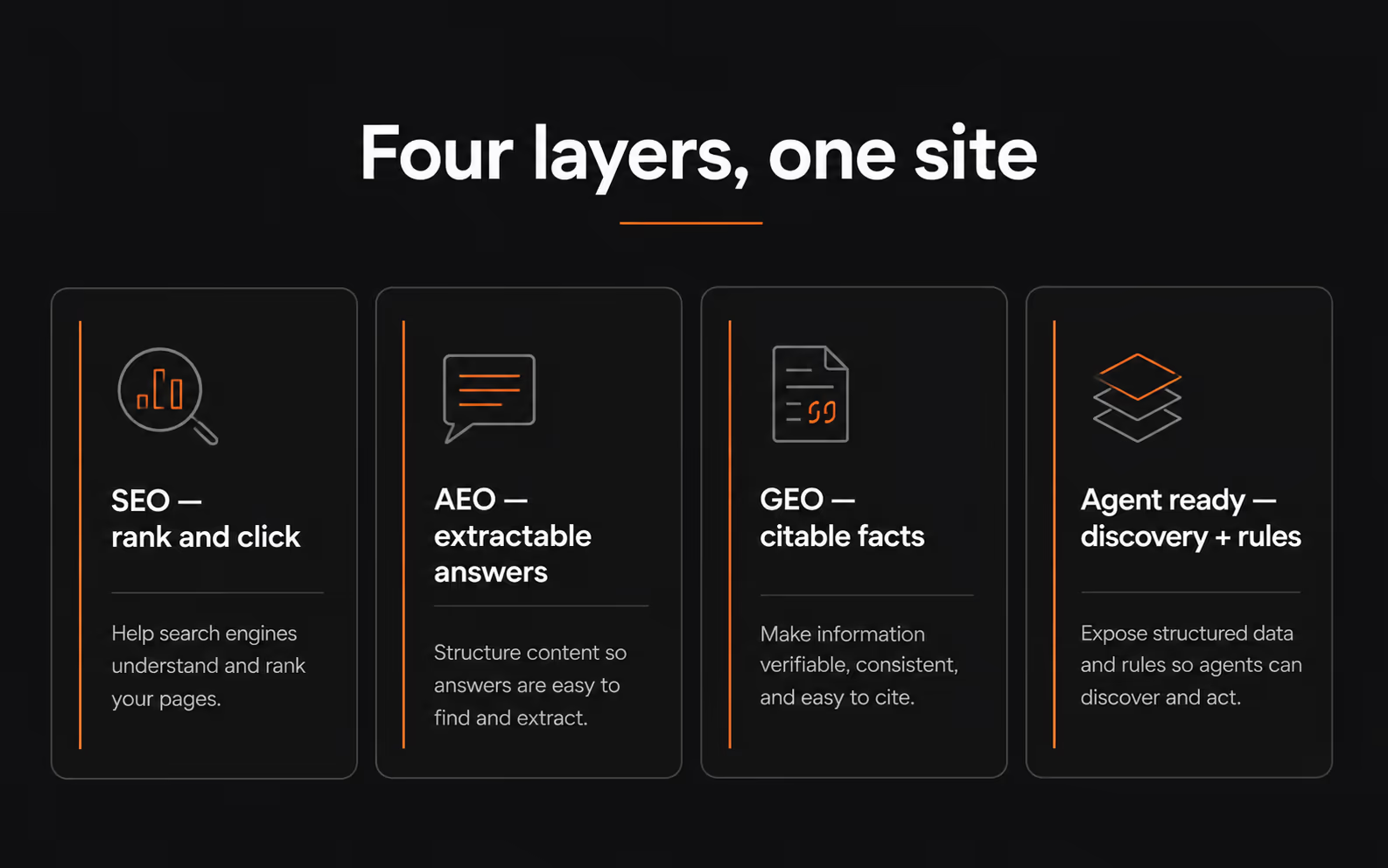
| Layer | Job | Typical tactics |
|---|---|---|
| SEO | Rank and get clicked in classic search | Technical health, relevance, links, Core Web Vitals |
| AEO | Win extractable answers | Snippet-ready leads, FAQ, clear H2 outline |
| GEO | Earn citation in generative answers | Consistent facts, proof, entity clarity, quotable paragraphs |
| AI agent readiness | Let agents discover, interpret, and respect your rules | Crawl files, structured data, content formats, capability discovery |
They stack. A page that ranks but has no FAQ or schema can still lose the AI answer box. A perfect Lighthouse score with vague “we offer solutions” copy still gives agents nothing specific to recommend.
AI SEO in practice is not a separate religion. It is technical SEO plus answer-shaped content plus discovery hygiene so AI search and assistants can use you without hallucinating your offer.
Start with Cloudflare's free scanner: Is it Agent Ready? (paste your URL). Then use the table below as a practical self-check. No NXTBlue audit product required.
| Sign | Why it hurts agents (and people) |
|---|---|
| Slow website | Timeouts and abandoned fetches; Core Web Vitals still matter for SEO |
| No schema markup | Machines guess your category, services, and contact details |
| Poor navigation | Hard to map what you sell or how pages relate |
| Missing FAQ | No literal Q&A for answer engines to lift |
| Contact information hidden | Assistants cannot confidently route a caller |
| No structured service pages | One vague homepage is not a catalog of offers |
| Important text only in images | OCR is unreliable; facts should live in HTML |
| No sitemap | Agents and crawlers miss deep URLs |
| Weak accessibility | Semantic gaps that also hurt machine parsing |
No robots.txt / unclear AI bot rules | Friendly retrieval bots and training bots get the same vague signal |
Industry pain points (brief):
Practical order for most owner-led businesses. Do what you can in-house; rebuild when the CMS fights you. Re-run Cloudflare’s Agent Readiness check after each fix so you can see which discovery and content signals still fail.
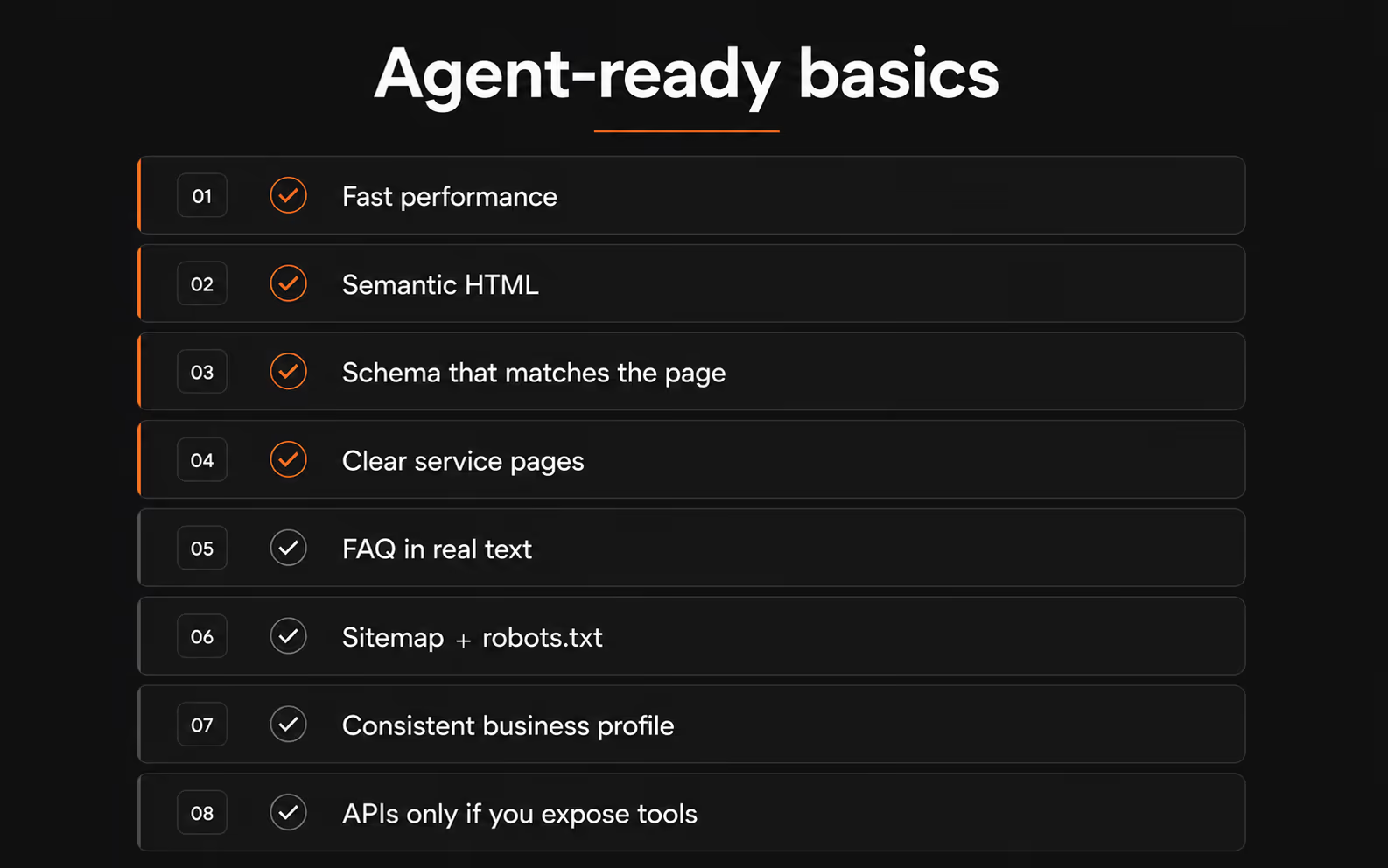
Compress images (prefer AVIF/WebP), cut unused scripts, host close to users. Agents and people both abandon slow origins.
One clear H1. Logical H2/H3. Lists for steps and offers. Skip heading jumps that hide hierarchy.
Organization / LocalBusiness, Service or Product, FAQPage, BreadcrumbList, BlogPosting when relevant. JSON-LD must mirror visible text-no fake ratings.
Each real offer gets a URL with who it is for, what they get, time/price bands when honest, and a next step. That is website for AI in plain terms: machines need pages, not one megapage.
NAP (name, address, phone), Google Business Profile, and site footer should agree. Inconsistency trains models to distrust you.
Answer search-shaped questions. Keep the same Q&A in on-page FAQ and structured data.
robots.txtPoint robots.txt at the sitemap. Decide training vs retrieval: many teams allow citation/input crawlers while restricting training-only bots, and declare preferences with Content Signals when their stack supports it.
A maintained llms.txt (and similar discovery links) helps agents find canonical URLs. Markdown negotiation is a Cloudflare-checked upgrade when hosting supports it-nice after basics, not instead of them.
Booking engines, catalogs, and authenticated actions benefit from API catalogs or MCP cards. A static brochure site should not invent fake MCP endpoints to inflate a score.
Alt text, focusable controls, contrast, and labeled forms help people and reduce ambiguous markup.
| Business | What an assistant needs to recommend you |
|---|---|
| Restaurant | Hours, location, menu highlights, reservation path, reviews cited honestly |
| Manufacturer | Product lines, specs, regions served, RFQ contact, lead times if published |
| Digital agency / consultancy | Services, industries, proof outcomes, engagement model, contact CTA |
| Clinic | Treatments, locations, booking, insurance FAQ, practitioner credentials |
| Retailer | Product entities, price/availability when shown, return policy, store vs ship |
If those facts only live in sales decks or WhatsApp broadcasts, agents will invent gaps-or skip you.
Self-check first. Then be honest about the stack.
A website modernization (redesign or revamp) is often the right next system when:
NXTBlue is a solutions consultancy-not a website agency pitching pages in isolation. Engagements start with a paid diagnosis. If the bottleneck is discovery and conversion on a weak site, we Build under the websites capability: structure, performance, schema, FAQ, and discovery hygiene baked into the rebuild-so the site is ready for people, search, and agents together.
We also help with growth systems and automation when diagnosis points there (growth, automation). This post is educational so you can check yourself; the commercial offer is a Build that includes agent-minded website work, not a standalone free audit SKU.
Related reading:
Cloudflare did not invent the idea that machines read the web. They made agent readiness easier to talk about with a public score and Radar data. Run your URL on isitagentready.com as a wake-up, not a vanity metric.
Keep doing solid SEO. Add AEO and GEO habits: snippet-ready leads, FAQ, consistent facts. Ship the boring agent basics. Rebuild when the current site cannot.
The businesses that win quiet recommendations will be the ones whose sites tell the truth clearly-to humans and to agents.
If your self-check failed on structure, schema, or service clarity-and your stack cannot fix it cleanly-talk through whether a website modernization should come first.
It means machines-not only people-can discover your pages, read clear content, understand your services or products, and trust your crawl rules. Cloudflare's Agent Readiness score is one public way to measure parts of that readiness.
Cloudflare launched https://isitagentready.com/ to score how well a site supports emerging agent standards across discoverability, content format, bot access control, and capabilities. Paste your URL to see pass/fail checks with guidance.
No. SEO still matters for Google rankings, but answer engines and AI assistants also need snippet-ready copy, structured data, clear FAQs, and honest crawl preferences. SEO, AEO, GEO, and agent readiness work together.
SEO helps pages rank in classic search. AEO makes answers easy for answer engines to extract. GEO makes your facts citable in generative answers. Agent readiness adds machine discovery formats and access rules so agents can use the site correctly.
Yes, when it matches visible content. LocalBusiness, Service, FAQPage, Product, and Organization JSON-LD help machines map who you are, what you offer, and how to contact you-without inventing claims that are not on the page.
No. Most owner-led content sites should start with robots.txt, sitemap, Content Signals, clear pages, schema, and FAQ. MCP, API catalogs, and commerce protocols matter when you expose tools or transactions-not as a vanity score chase.
Run Cloudflare's scanner at https://isitagentready.com/ (use a Content Site-style scan if you are not an API platform), then walk the practical checklist in this article: speed, headings, schema, FAQ, contact clarity, service pages, and crawl files.
When the site is slow, hard to parse, missing service structure, or stuck in a builder that cannot ship schema, clean HTML, and discovery files. A modernization engagement can bake agent readiness into the rebuild-not bolt it on as a sticker.
Yes. We start with a paid diagnosis. If the bottleneck is a weak or outdated site, we Build under the websites capability with performance, structure, schema, and discovery hygiene in scope-not a separate free audit product.
No. Keep technical SEO and useful content. Add answer-ready structure and agent discovery so you are findable in classic search and usable when assistants research, compare, or recommend.